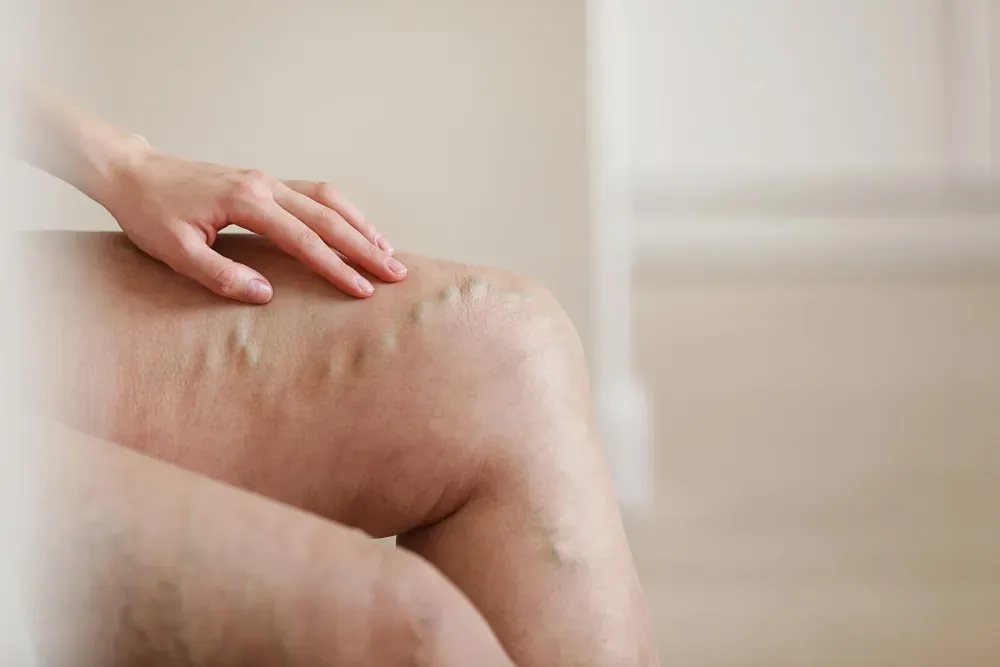
5 Hidden Dangers of Varicose Veins You Shouldn’t Ignore
At Heart and Vascular Care, we see many patients who come to us for help with varicose veins. Many worry about how these damaged veins make their legs look, while others worry about the potential for more serious health outcomes. Residents of Plano and McKinney, Texas, can rely on our team for state-of-the-art varicose vein treatment.
Here’s what you need to know about the potential dangers of untreated varicose veins.
What are varicose veins and why do they happen?
Your veins work to transport deoxygenated blood back to your heart, where the process of infusing blood with oxygen begins anew. But in your lower body, this transport happens uphill, against gravity.
Your veins have a series of tiny valves inside that prevent blood from flowing backward. Sometimes these valves fail, allowing blood to pool in a section of the vein and begin to coagulate. This is what causes the darkened, bulging appearance of varicose veins.
Not all varicose veins will cause other health issues. Sometimes, varicose veins are merely an aesthetic problem. But sometimes these damaged veins can threaten your health.
#1: Ulcers can develop over time
Some people with varicose veins develop ulcers, or open sores. An ulcer usually begins as a small dark spot near a varicose vein. Over time, that spot widens and eventually transitions into an open sore. Ulcers increase your risk of infection and are often painful.
#2: Bleeding is possible
Varicose veins can put pressure on the vein walls and eventually lead to bleeding along the damaged section of the vein. That bleeding often doesn’t stop on its own, which can cause distress.
#3: Superficial thrombophlebitis
This condition occurs when blood clots develop in veins close to the skin’s surface. Inflammation follows, which can cause itching, irritation, or pain. Your skin might also feel warm to the touch. While superficial thrombophlebitis is usually not a serious concern, it often occurs alongside deep-vein thrombosis, so it’s important to see a vascular health specialist for a thorough diagnostic assessment.
#4: Deep-vein thrombosis
In some cases, varicose veins can cause blood clots in deeper veins in your legs. Although you may not be able to see these damaged sections of vein, they can cause swelling, pain, or changes in your skin color. It’s important to treat deep-vein thrombosis.
#5: Pulmonary embolism
Left untreated, deep-vein thrombosis can cause a pulmonary embolism, which is when a blood clot in a vein in your leg breaks free and travels to your lungs. This is a serious medical emergency and requires immediate care. Symptoms of pulmonary embolism include shortness of breath, chest pain, and rapid heartbeat.
Worried about varicose veins? We can help
If you’ve noticed changes in the skin on your lower legs and are concerned about varicose veins, the best next step is to meet with the team at Heart and Vascular Care for a diagnostic work-up.
We can check your veins and determine if treatment is necessary. If the issue is purely cosmetic, you can choose from several treatment options to reduce the appearance of varicose veins. If you have signs of a more serious vascular health issue, we’ll explain all available treatment options.
Booking your visit takes just moments, whether you choose to connect with our practice online or by phone.